
Walk-out rate is the most expensive number most retailers never track. Stores count how many people come through the door, but they rarely measure how many leave without buying anything. That gap between foot traffic and completed sales is where revenue quietly disappears. This guide breaks down what walk-out rate really means, why customers abandon stores, and the operational fixes that turn more visits into sales.
What Is the Walk-Out Rate, and Why Does It Matter?
Most walk-outs come down to one avoidable problem: customers wait, lose patience, and leave before anyone can help them. Tools like Booxi's queue management solution for retail organize walk-in flow so shoppers know their place in line and keep browsing instead of standing around. That structure gives stores a realistic shot at converting the traffic they already have, rather than watching it slip back out the door.
Walk-out rate is the percentage of store visitors who leave without making a purchase. It's the inverse of your in-store conversion rate, and it's the clearest signal of lost revenue on the sales floor. Because most retailers optimize for traffic, a high walk-out rate often hides in plain sight behind healthy visitor counts.
How Is Walk-Out Rate Different From Foot Traffic?
Foot traffic measures how many people enter your store. Walk-out rate measures how many of them leave empty-handed. The two numbers tell opposite stories: traffic looks like success, while walk-outs reveal the sales that never happened. A store can post record foot traffic and still lose money, because volume at the door means nothing if visitors don't convert.
What Does a High Walk-Out Rate Cost a Store?
Every walk-out is a sale the store already paid to attract. Marketing budgets, rent, and staffing all go into getting a customer through the door, so a visitor who leaves without buying wastes that entire investment. Across a multi-location network, small percentage points of walk-out rate compound into significant lost revenue every single day.
Why Do Customers Leave Stores Without Buying?
Customers rarely leave because they dislike the products. They leave because friction gets in the way of the purchase. Wait times, understaffing, and a disjointed in-store experience are the 3 forces that push ready-to-buy shoppers back out the door.
How Do Long Wait Times Drive Walk-Outs?
Long waits are the fastest way to lose a sale. When customers stand in line or wait for an available associate, their intent to buy drops with every passing minute. Because waiting feels like wasted time, shoppers abandon the store even when they came in ready to spend.
How Does Understaffing at Peak Hours Affect Conversion?
Understaffing turns busy periods into missed revenue. During peak hours, a handful of associates can't reach every customer who needs help, so high-intent shoppers get ignored and leave. That's why the busiest moments, which should drive the most sales, often produce the highest walk-out rates.
What Role Does the In-Store Experience Play?
A confusing or impersonal experience quietly erodes conversion. When customers can't find help, don't know where to check in, or feel like just another number, they lose the motivation to complete a purchase. Because the in-store experience sets the emotional tone of the visit, friction here translates directly into walk-outs.
How to Reduce Walk-Out Rate in Retail
Reducing walk-out rate comes down to removing friction at the moments that matter. The most effective retailers manage waiting, connect online intent to the store, staff to real demand, and keep customers engaged while they wait. The 4 levers below address the root causes of walk-outs directly.
How Can Queue Management Cut Wait-Related Walk-Outs?
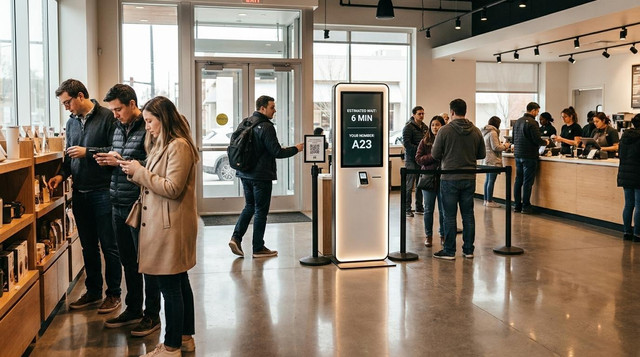
Queue management is the primary operational lever for reducing wait-related walk-outs. A digital queue replaces unstructured lines with a clear, real-time flow: customers check in, get an accurate wait estimate, and keep shopping instead of standing around. Because the wait feels controlled and visible, shoppers stay in the store rather than abandoning it.
How Can Appointment Booking Capture Online Intent?
Appointment booking turns online interest into a guaranteed store visit. When a customer can book a time slot from the website, their intent is captured before they ever arrive, and the store can prepare to serve them. That continuity between online and in-store closes the gap where drive-to-store traffic usually leaks away.
How Can Smarter Staff Allocation Match Peak Demand?
Matching staff to demand keeps conversion steady during rushes. Real-time visibility into who's waiting lets managers assign associates where they're needed most, so no high-intent customer is left unattended. Because staffing follows actual traffic instead of a fixed schedule, peak hours stop producing peak walk-outs.
How Can Self Check-In Keep Customers Browsing?
Self check-in frees customers to shop instead of wait. When shoppers join a queue through a QR code or tablet, they can browse the floor, try products, and get notified when it's their turn. That freedom keeps them engaged with the merchandise, which raises the odds they'll buy before they leave.
How Can Retailers Measure and Track Walk-Out Rate?
You can't reduce what you don't measure. Tracking walk-out rate starts with comparing store entries against completed transactions, then watching how that ratio shifts by hour, day, and location. Consistent measurement turns walk-out rate from an invisible loss into a manageable performance metric.
Which Metrics Should Retailers Monitor?
A few core metrics reveal where walk-outs happen. Retailers should track in-store conversion rate, average wait time, staff utilization during peak hours, and conversion by location. Watching these numbers together shows which stores and which moments lose the most sales, so fixes can target the real problem.
Key Takeaways for Reducing Walk-Out Rate
Walk-out rate is a solvable problem, not a fixed cost of doing business. The retailers who reduce it treat waiting, staffing, and the in-store experience as levers they can control. By managing queues, connecting online intent to the floor, and staffing to real demand, stores convert more of the traffic they already have and stop leaving revenue at the door.
Frequently Asked Questions About Retail Walk-Out Rate
What Is a Good Walk-Out Rate for Retail Stores?
A good walk-out rate depends on the vertical, but lower is always better. Stores with strong in-store service and managed waiting convert far more visitors than those relying on unstructured walk-in traffic. The goal isn't a universal benchmark; it's steady improvement against your own baseline.
Can Queue Management Really Reduce Walk-Outs?
Yes, because most walk-outs trace back to waiting. When customers get a clear wait estimate and can keep shopping instead of standing in line, they're far less likely to leave. Queue management directly removes the friction that causes wait-related walk-outs.
How Quickly Can Retailers Expect Results?
Retailers often see movement quickly, because reducing wait friction affects behavior immediately. Once customers can check in, browse, and get served in a structured flow, conversion tends to improve within the first busy periods. Sustained gains come from tracking the metric and refining staffing over time.